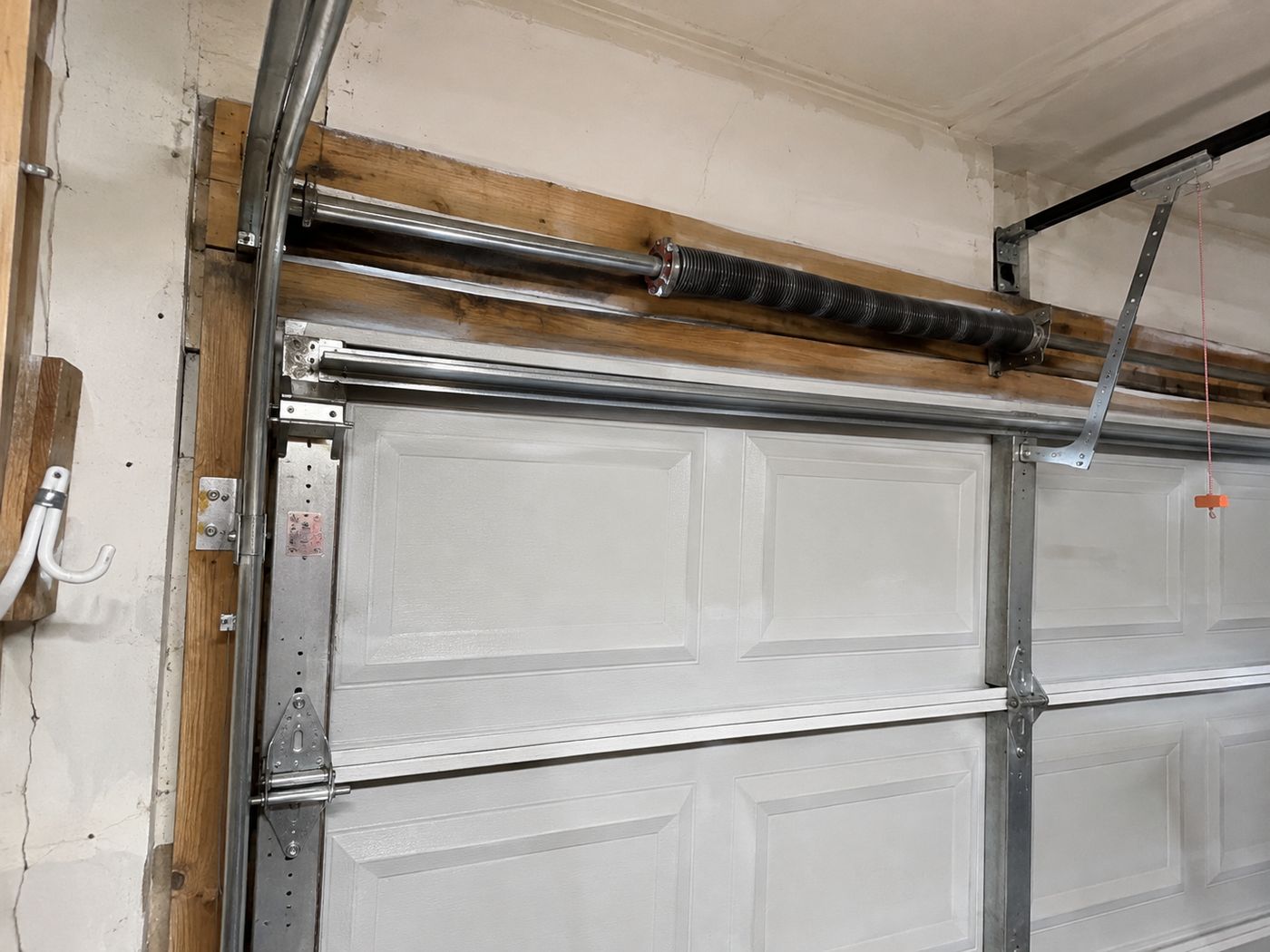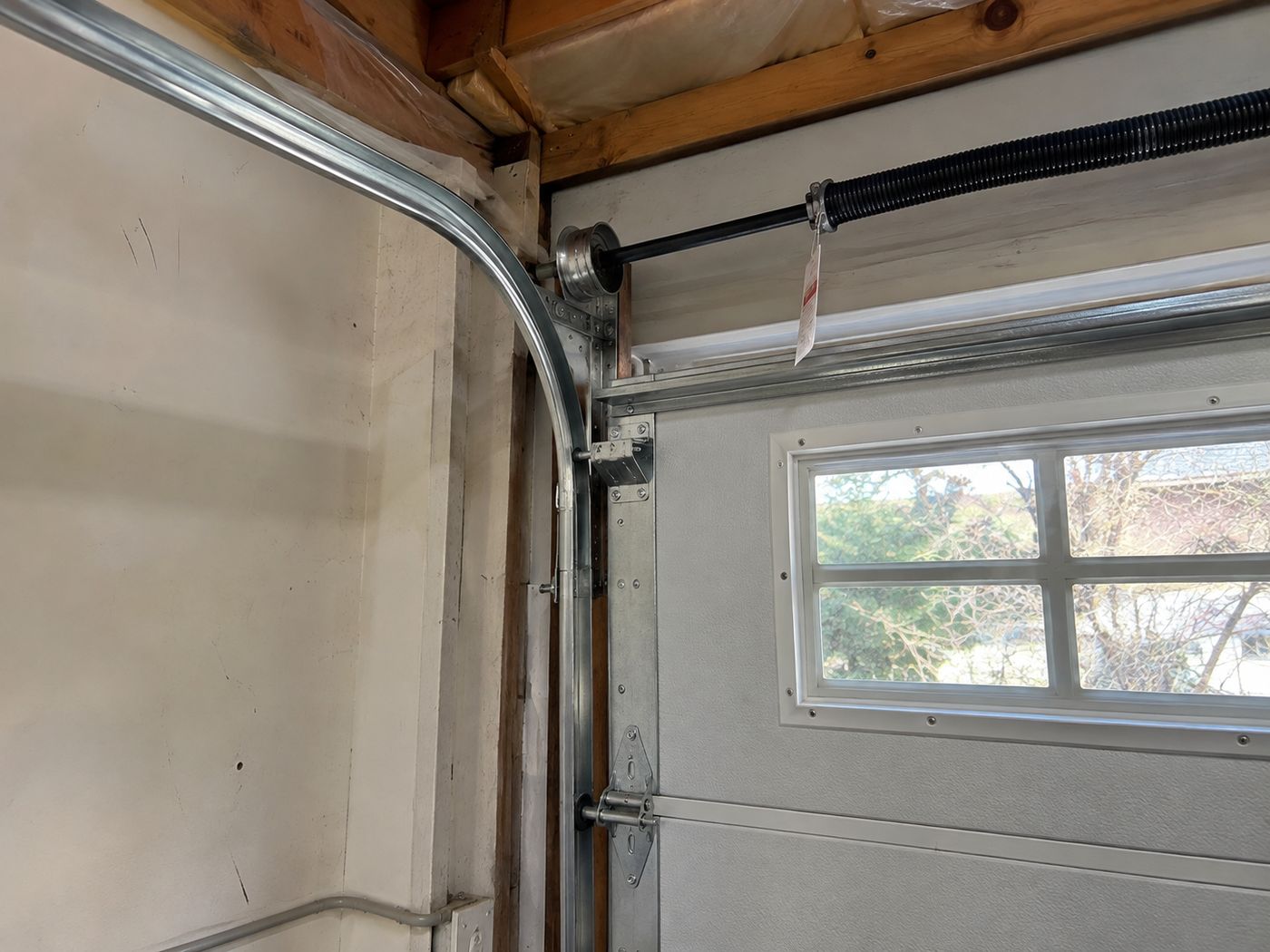
Torsion springs
Mounted on a shaft above the door opening. They twist to store energy and are common on many residential doors.
Springs do most of the lifting. When one fails, the opener and the door are left to carry weight they were not built for.
Springs hold a large amount of stored tension. Winding or removing them without training and the right tools can cause serious injury. If you suspect a broken spring, keep people and vehicles clear and call a technician.
Mounted on a shaft above the door opening. They twist to store energy and are common on many residential doors.
Run along the sides of the horizontal tracks and stretch as the door closes. Found on many older or lighter doors.
Springs are rated for a limited number of door cycles, and higher-cycle options exist.
What to expect during a typical spring replacement.
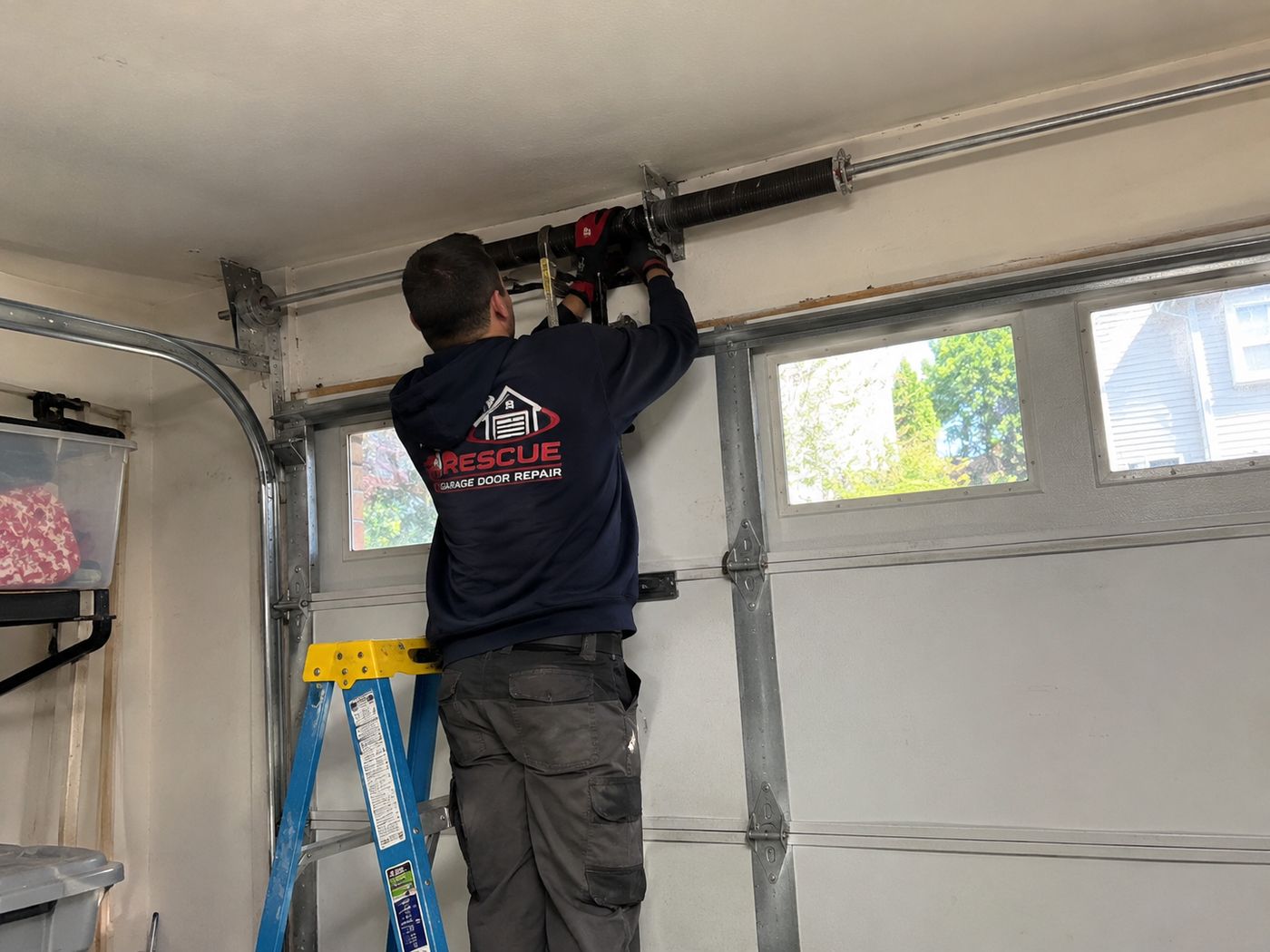
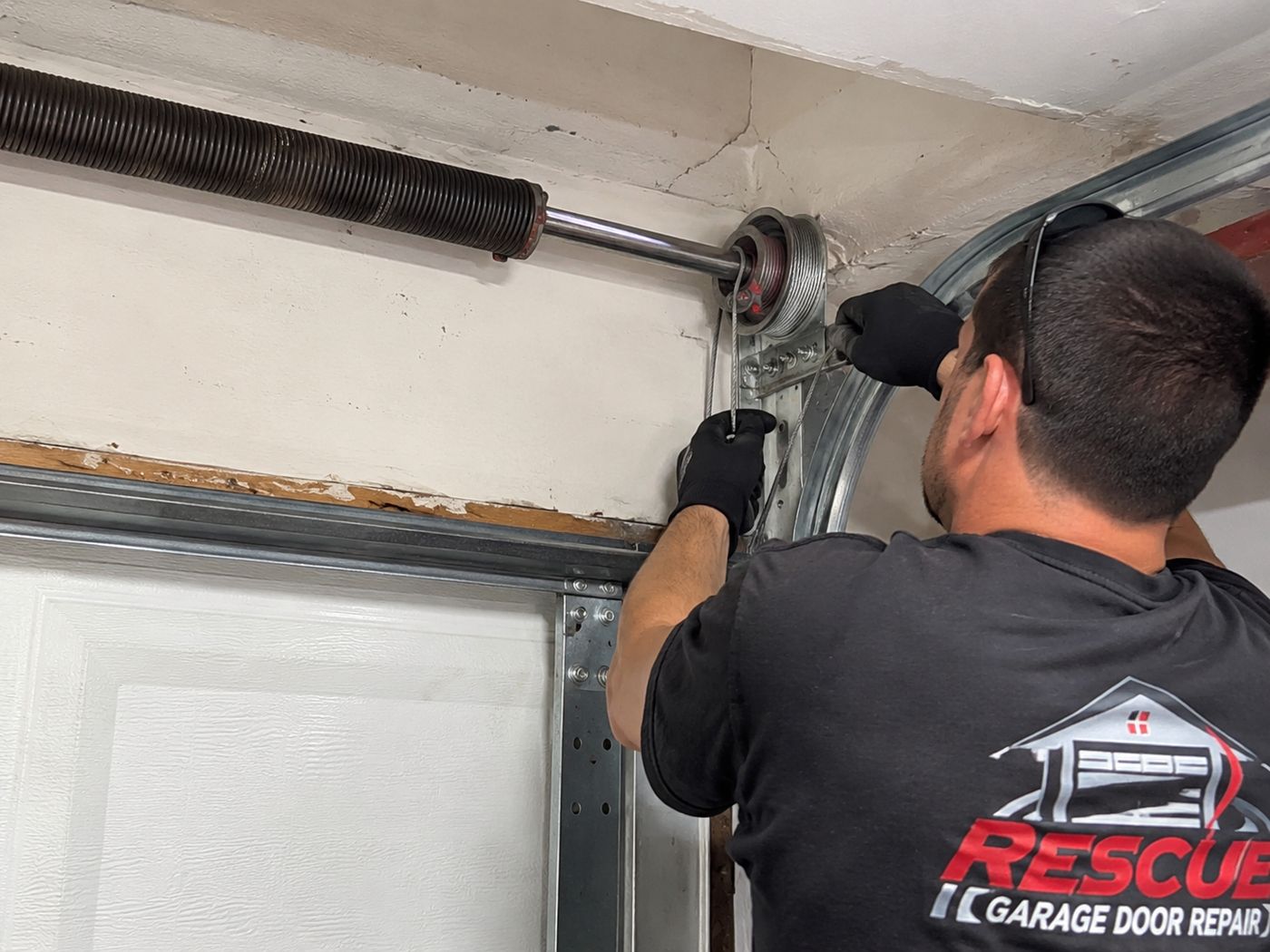
Check the springs, cables, drums, rollers and door balance.
The technician explains what failed and the repair options.
On a two-spring door, technicians often recommend replacing both springs.
Confirm the door lifts evenly and the opener’s safety reversal works.
If the cable or drum is also damaged, see cable, roller and track repair. For the full service, see garage door repair.
Estimates are free. Call and describe the door and what happened. Photos of the spring and the door help.
Call NowWe advise against forcing it. The door can be very heavy without spring support and may be unsafe to lift or lower. Call a technician.
On a two-spring door, springs of the same age tend to wear at a similar rate, so replacing both is often recommended.
Usually the springs can be replaced without replacing the door. The technician checks the cables, drums, rollers and hinges before recommending the repair, because damage to those parts can change the scope.
It depends on the door and the spring type. The technician can tell you once they have seen the door.
Routine maintenance, balanced door operation and periodic inspection help catch wear early. A technician can check the springs and hardware for wear.